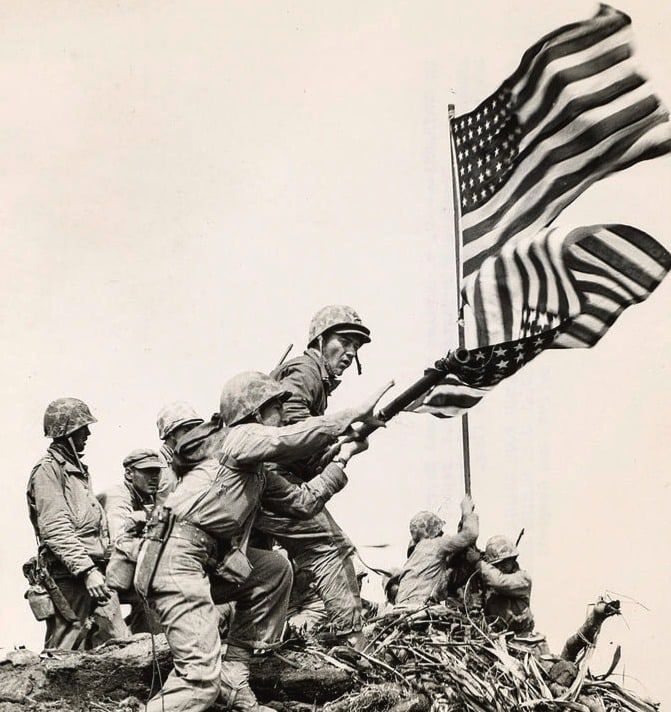
In the 1990s, at roughly the 50th anniversary point, American perceptions of the Second World War became highly nostalgic and sentimental: the US contribution was not just virtuous, it was claimed, but exceptional, confirming America’s rightful position in the post-war world as one of the two great super-powers - indeed, after the collapse of the Soviet Union in 1989, the one and only global super-power. Popular culture of the time reflected this sense of American exceptionalism with books, films and TV extolling the achievements of the ‘Greatest Generation’, as exemplified in Steven Spielberg’s hugely successful series Band of Brothers and the movie Saving Private Ryan. In more recent years, however, American historians have begun to push back against what they see as the myth of America’s ‘Good War’, seeing it as a self-congratulatory narrative which bears little relation to the more complex reality of the war years and which, some would say, has encouraged the US since 1945 to embark on many other military ventures around the world - most if not all of which have dismally failed to live up to the comparison with the more ‘heroic’ World War Two. The fact is that, far from spearheading the democratic West’s resistance to Nazi totalitarianism (as was later claimed), the US came to the war late and only in response to direct attack - from Japan at Pearl Harbour in December 1941 and from Hitler’s declaration of war on America a few days later.
If you think you know about WW1 and WW2, it’s time to think again.

Michael Baker is an Oxford-educated historian, award-winning screenwriter and creator of the Unknown Warriors podcast. About Michael